
Does That Mean He Doesn't Love Us Anymore?
What someone leaves behind doesn’t have to become your identity.

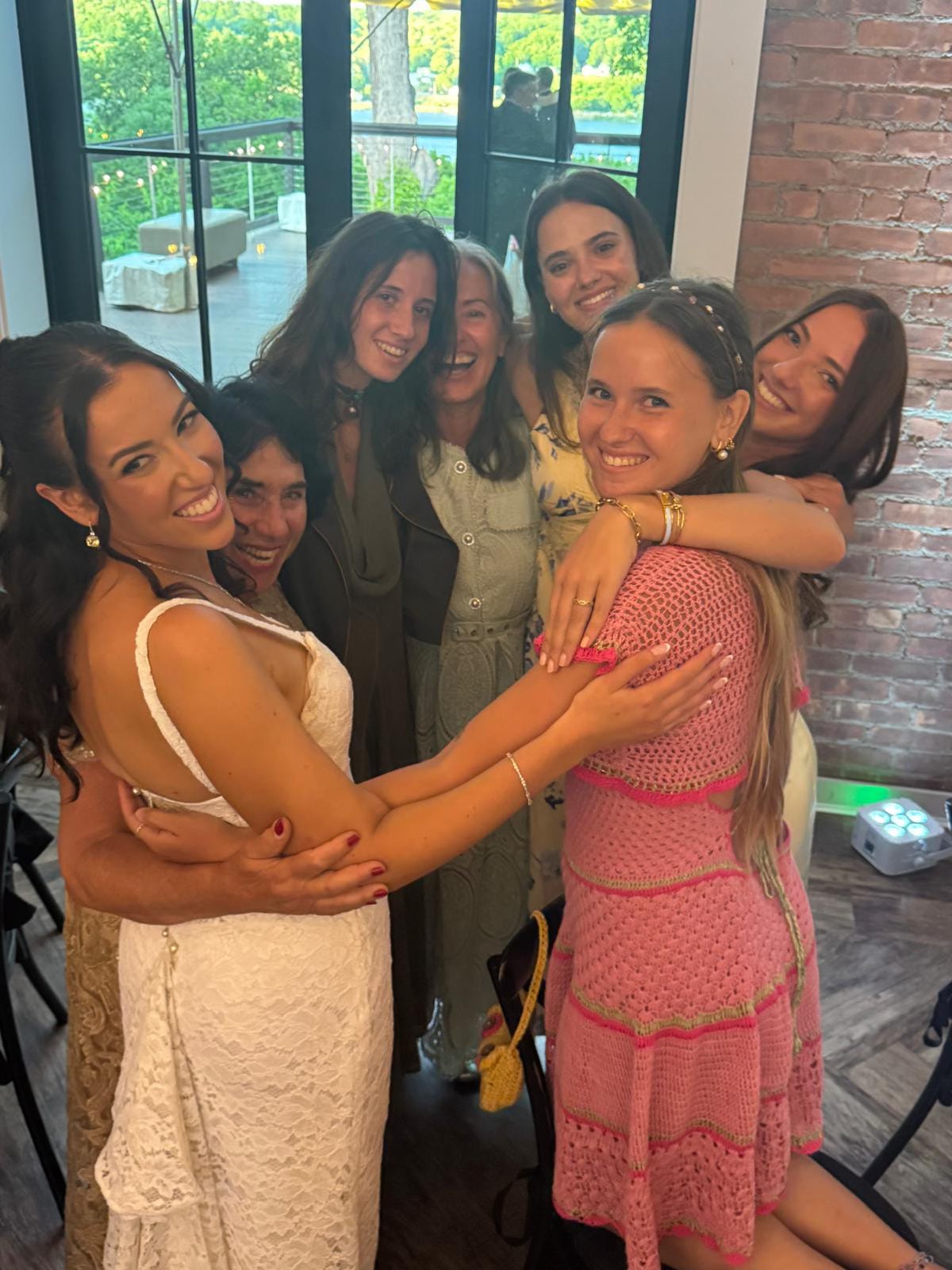
In the middle of June I attended my niece’s wedding.
It touched me.
I loved witnessing the formation of a new family celebrated by the whole proverbial village.
Even my own three daughters managed to synchronize their different schedules and come together for the occasion. It felt incredibly special to be all together again.
Since I spent so many years living outside the United States, while my sister raised her family here, we simply haven’t gathered as often as we used to when the children were young and we were in charge of organizing everyone’s lives.
The passage of time was striking.
Our little girls are now women.
My niece is the first to get married, and somehow it felt like the beginning of a new chapter.
There were professional photos being taken, following all the expected protocols.
But among my favorite photos is this one of me, my mom and the five girls: my daughters and my nieces.
Because in my family, women carried the village.
The next day it was Father’s Day.
I spent the day celebrating the Summer Solstice, surrounded by loved ones and enjoying the simple summer pleasures.
And yet, it brushed against an old wound.
My father left us when my parents were in their sixties. My sister and I were in our forties by then, with husbands, children, and families of our own.
He didn’t just leave our mother.
He cut all of us off.
I remember one of my young daughters asking at the time:
“Does that mean he doesn’t love us anymore?“
How do I answer that?
How do I explain to my children - and to my own Inner Child - that someone’s leaving has nothing to do with our lovability?
Even when I know that is true.
I am not angry.
I am not devastated.
I am just aware of an old wound that no longer runs my life, even if it still lives inside me.
For years I tried to reconcile how a father could change loyalty to his children once he changed loyalty to his wife.
How children become collateral damage.
I witnessed this in both my father’s and my husband’s father’s choices.
I don’t think I understand it any better today.
What has changed is this:
I no longer make his leaving mean anything about my worth.
Or my children’s worth.
Or the worth of any child who has ever wondered whether being left means not being loved.
I heal my father wound by trying not to carry it into my marriage.
By refusing to see all men through the lens of the one who left.
By learning to love the man who stays - over and over.
The man who shows up for his children differently than my father did.
In every area of my life, I try to make the same choice:
Not to build my life around the wound.
Most of us don’t get to choose the wounds we inherit.
But we do get to choose whether we continue building our lives around them.
If you recognize yourself in the wound that still lives inside you and drives some of your life choices — I invite you to join me this November for True to Me, Open to You.
This is a three-month group coaching program for people who are ready to stop organizing their lives and relationships around old wounds.
To learn to stay connected to others without losing themselves in the process.
Enrollment opens in September. For all information and to join the interest list, go here.
A parent — the person who is supposed to love us unconditionally — leaving the family can inflict such a painful wound on a child, even a grown one. What helps with healing from this wound is to recognize that the parent who left had unhealed wounds of their own that prevented them from loving and enjoying their child(ren) fully. Good for you for breaking this cycle of generational trauma.
I too was incredibly moved by my niece's wedding. It's remarkable to see people I've known since they were newborns now starting families of their own.