

October 20, 2021
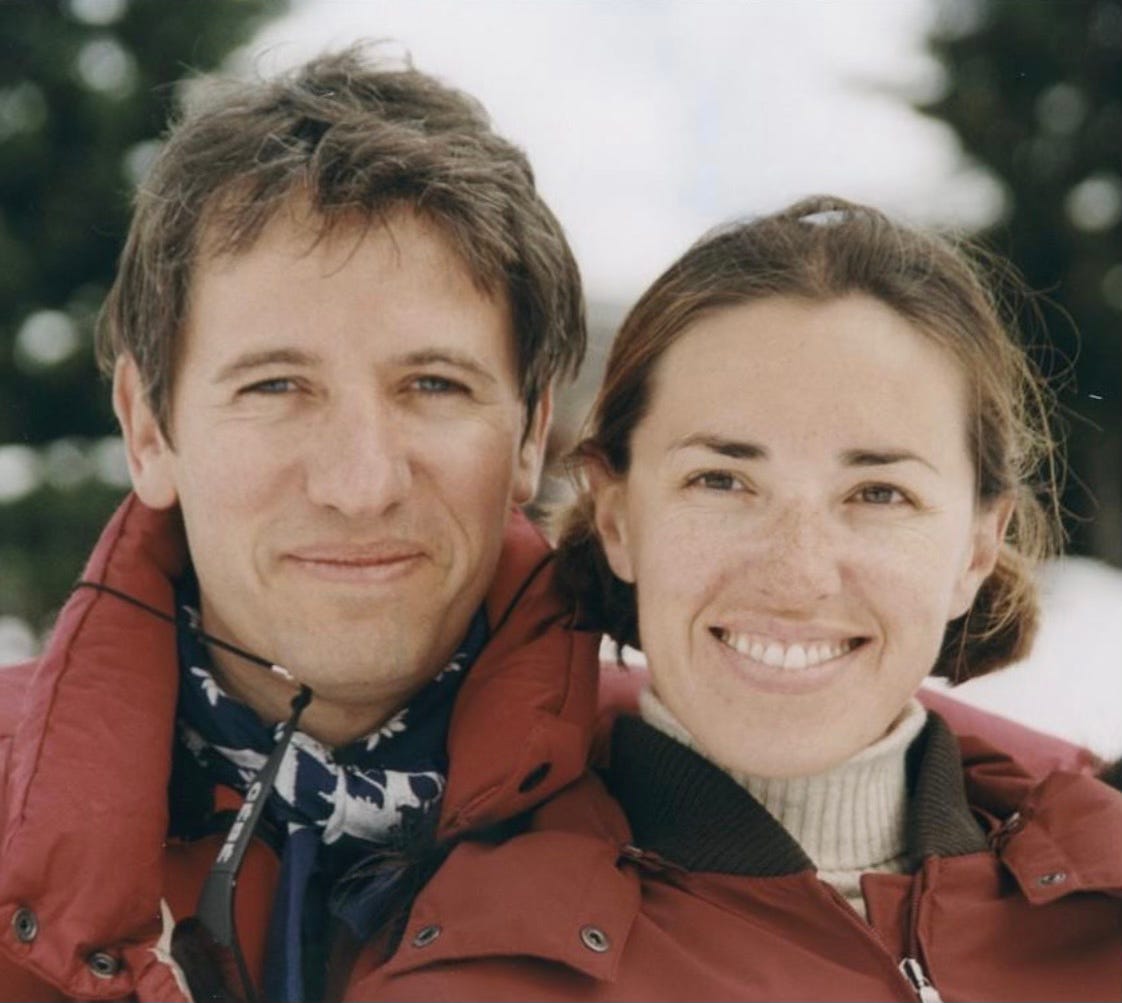
Realizing that my husband was a person with fears, triggers, and his own wounded inner child was a serious blow to my capacity to love him.
Driven by scarcity, inadequacy, and the longing for love and protection I did not receive from my father, I needed my husband to be my savior and protector.
When I felt loved by him, I was willing to abandon myself in gratitude. I adored him, placed him on a pedestal, and ignored all evidence of his humanity.
Eventually I had to confront the painful reality that he could not protect me from the uncertainty and vulnerability of life. He was just as human and limited as I was.
At first this realization brought fear, then anger. I had made him responsible for my sense of safety, and when that illusion collapsed, so did the structure of our relationship.
Letting go of the fantasy of my husband as my protector initiated a painful process of differentiation. It was much harder than I expected because so much of my identity had become wrapped up in him.
The codependent dynamic that had shaped our relationship until then began to break down.
I had spent years trying to anticipate and meet what I imagined were my husband’s needs, hoping that if I loved him well enough, he would finally make me feel safe, chosen, and fulfilled in return.
But once he stopped being able to meet those expectations, I gave myself permission to stop organizing my life around meeting his needs.
What felt so much like an act of rebellion and liberation was really the other side of woundedness: I swung from extreme codependence into extreme independence.
Going toward independence did bring me closer to becoming a sovereign adult.
In my late-40s, I was learning to become responsible for my own well-being. I began giving myself permissions that I would not have dared to before, when I was single-mindedly focused on pleasing my husband as the single source of my potential fulfillment.
Years later, I am moving closer to the center both in my views about relationships and in my own feelings.
Having experienced both codependence and hyper-independence, I am now more interested in interdependence: two whole people relating without abandoning themselves.
From this new perch, I view relationships as here to serve the evolutionary process.
Until recently, committed relationships—particularly marriage—served as instruments of tradition and perpetuated conservative family and societal values.
Today, as we are going through a profound reevaluation of values individually and collectively, the way we do relationships is also undergoing evolutionary pressure.
I no longer see relationships as places where another person completes us or rescues us from ourselves.
I see them as places that reveal us to ourselves.
Relationships illuminate the places where we still give our power away, where we abandon our needs, where we seek externally what we have not yet learned to cultivate within.
And that movement toward greater self-awareness, responsibility, and wholeness is deeply personal work. No one else can do it for us.
In my case, the emotional wounds that were reawakened in my relationship actually illuminated all the places where I had given my power away.
I had deferred important decisions about my life to my husband and slowly stopped being fully responsible for myself. For a while, that felt comforting. Until it didn’t.
I was forced by life’s circumstances and the resulting stress in my relationship to step into emotional adulthood. I began disrupting the patterns our relationship had been built on, and as I changed, the rhythm of our relating began to change too.
This is one of the hidden gifts of relationships: they reveal us to ourselves.
As we grow, heal, and become more conscious, the way we relate naturally changes. Sometimes the people around us grow with us. Sometimes they resist. Sometimes the relationship can no longer continue in the same form.
Relating is not just communication. It is a moment-by-moment exchange of information happening through the nervous system.
But many of us are disconnected from our bodies and therefore disconnected from the present moment. Instead of relating to the person in front of us, we relate to the story we carry about them in our minds.
Stuck in these stories, we project, anticipate, defend and interpret.
Rather than meeting people as they are, we meet them through the filter of our wounds, expectations, fears, and past experiences.
And when we are disconnected from our bodies, we lose access not only to ourselves, but also to intimacy.
Because intimacy is not built through performance, rules, learning love languages, or perfectly executed relationship skills.
It emerges through presence.
Modern relationship advice often focuses on techniques, roles, and behavioral formulas while missing the deeper issue: many people do not actually feel safe enough to truly connect.
No script, reassurance, or performance can replace the experience of feeling genuinely met.
Since our romantic relationships rarely deliver the deficit of love we feel from childhood, our attachment wounds get activated. We long so deeply to feel loved, chosen, and safe. We shapeshift, sacrifice ourselves, and become hyper-focused on whether the other person is giving us what we need.
And when we do not feel loved the way we long to, we become triggered.
In those moments, the past overtakes the present.
We are no longer relating to the person in front of us. We are relating to old pain, old fear, old memory.
The connection breaks.
Human beings are designed to relate through neuroception or resonance: “I feel you feeling me,” to use the words of Thomas Hübl.
When we feel another person’s presence—when we feel felt by them—the nervous system softens. Safety emerges.
And when that sense of connection is absent, the body feels stress, even if loving words are being spoken.
This is why words alone are often not enough.
The body needs to feel the presence behind them.
“I feel you feeling me” is the foundation of relational safety.
When we are regulated and present, we can receive another person more fully. Their words affect us. Our words affect them. We are open, responsive, alive to each other in real time.
But triggers interrupt that process.
When we are emotionally activated, our history overtakes the present moment. We stop relating to the person in front of us and begin relating to an internal story shaped by past wounds and implicit memory.
Presence disappears.
And this is why presence may be the greatest gift we can offer one another.
To be present requires learning how to stay open to what is actually happening as it is happening.
It requires attunement: the ability to know our own inner world deeply enough that we can begin to feel another person’s inner world too.
It took me until my late forties to understand what true relational safety actually felt like in my body.
It was a kind of sweetness, a sensation of pleasure, and recognition in my solar plexus.
For the first time, I felt safe, full, connected, and free.
That embodied experience changed the way I understand love.
I believe the future of relationships lies not in greater control over one another, but in our growing capacity to remain present, embodied, and open to feeling others by welcoming them in.
I am so overwhelmed by your precise description of relational safety, and what hinders it, and what brings the connection to allow it.
I really struggle to articulate this, and you really did. Thank you!